WHES Scholars Debate ‘Longer School Day, No Homework’ Law at Edward M. Kennedy Institute for the U.S. Senate

WHES students experience legislation in real-time, with real debate
BOSTON (Apr. 13, 2026) – A fierce debate took place at the Edward M. Kennedy Institute for the United States Senate on Friday, Mar. 20. The issue was whether Witchcraft Heights Elementary School students should have a slightly shorter school day with homework or an extended day without homework.
There were arguments for both sides. There was negotiating, compromising, and lobbying, though never contentious. And after 90 minutes, a vote.
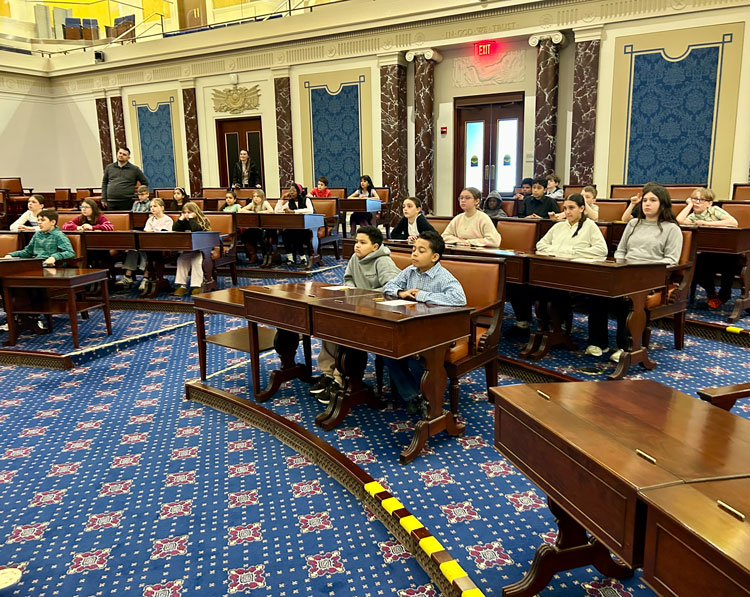
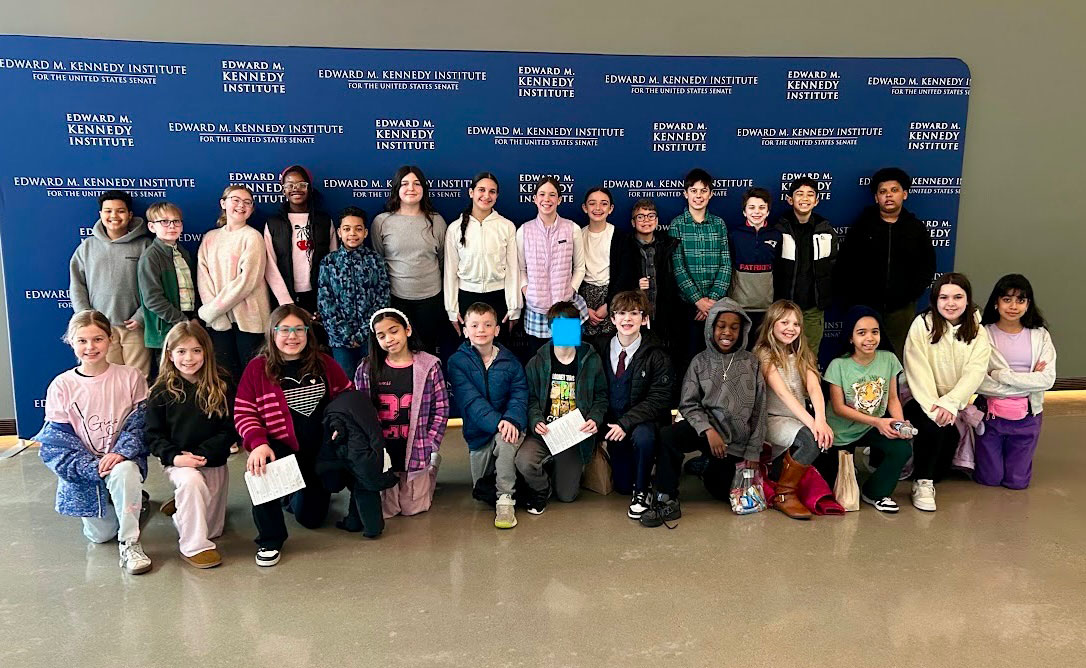
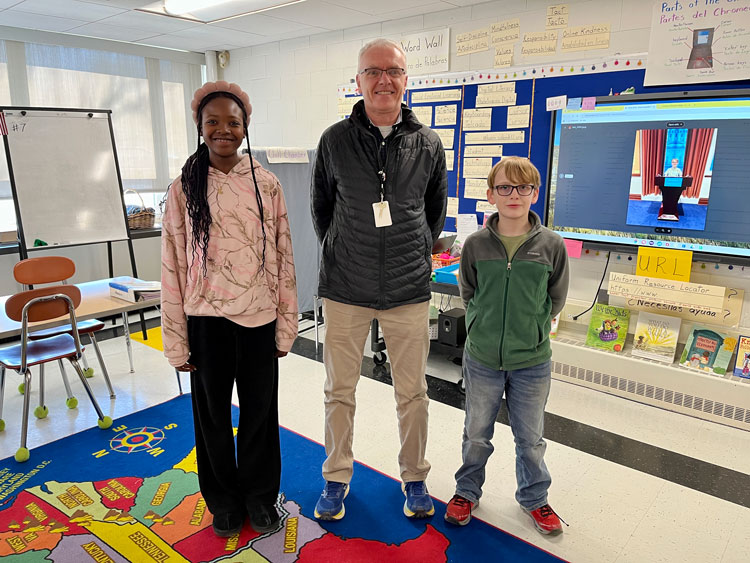
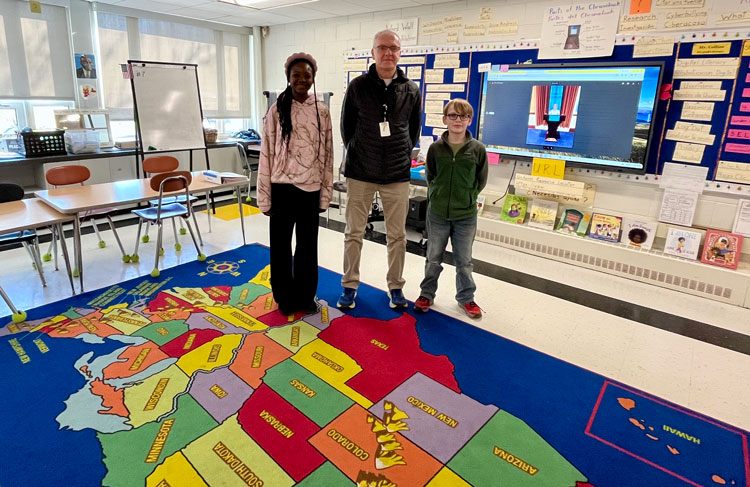
In lock step with the District’s core principle of elevating learning, the WHES Student government – twenty-five scholars in grades 4 and 5, accompanied by digital literacy educator Michael Collins – visited the Institute on Mar. 20 to experience ‘Senator for a Day,’ at which students practiced the process of passing a law.
“A couple of the students said it was the best field trip they’ve ever been on,” said Mr. Collins, who is in his 16th year at WHES. “It’s my favorite. The kids love it. They’re treated like royalty.”
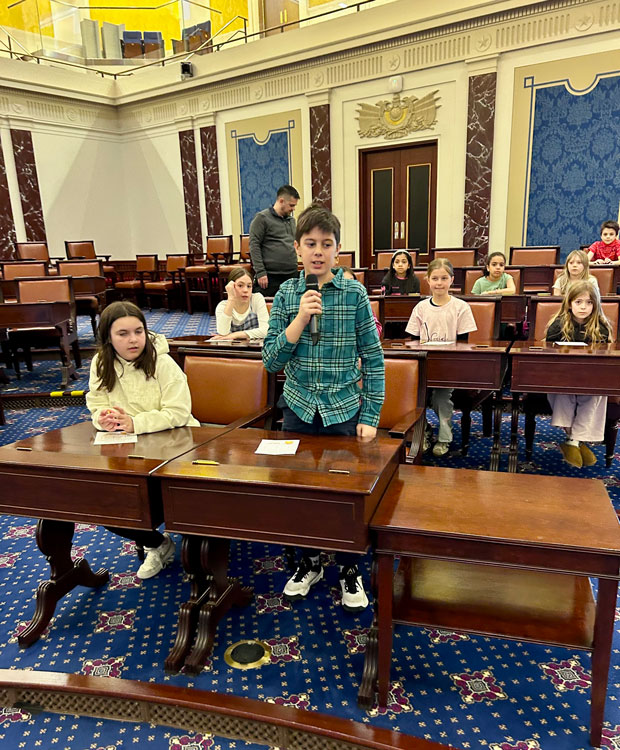
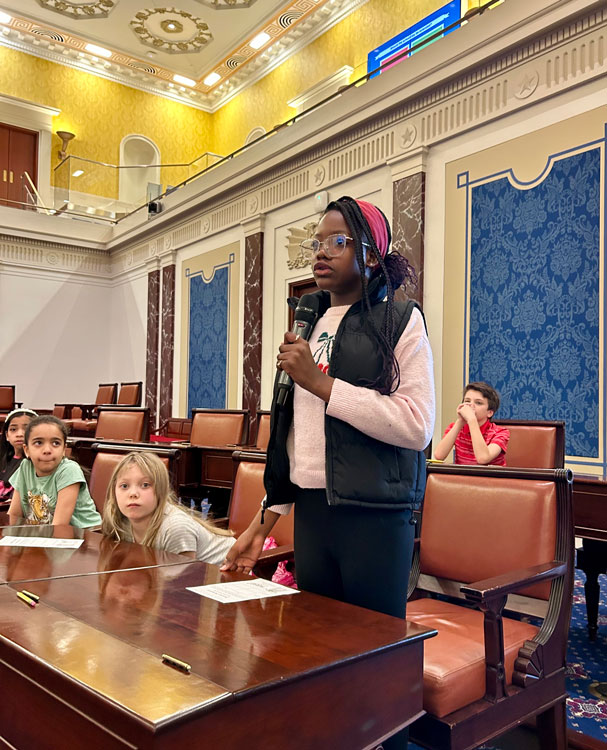
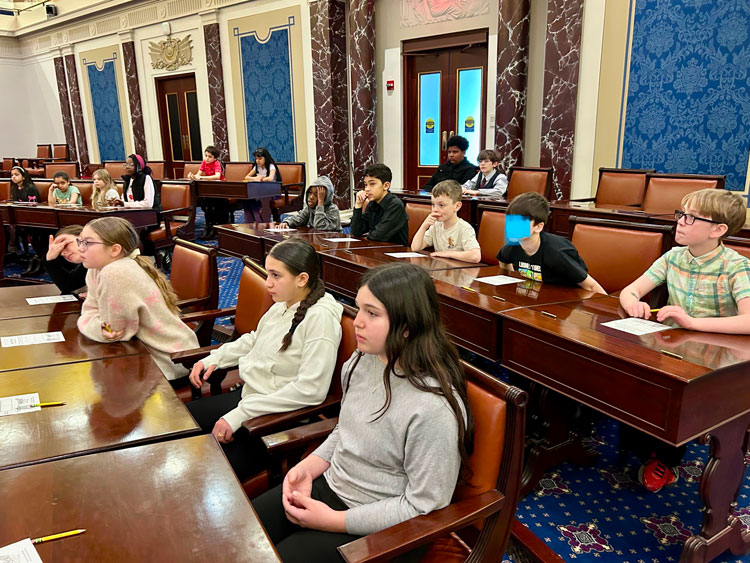
Upon arrival, WHES students were given a tour of the replica U.S. Senate Chambers and all students were assigned a seat, each seat representing a single U.S. state.
Students were presented data pertaining to both sides of the argument and took notes. One by one, several took advantage of the open microphone session to state their case for and against an extended school day with/without homework. Afterward, they met individually and informally with one another to plead their case.
Last year, WHES students arrived at 8:15 a.m. and were dismissed at 2:30 p.m. Effective this school year, to ease the flow of bus traffic among schools, the WHES school day shifted to an 8:30 a.m. start with 3:05 p.m. dismissal.
Grade 5 students Djamira Jn Baptiste and Miles Dwan were on the opposite ends of the issue. Ms. Jn Baptiste preferred the shorter school day with homework while Mr. Dawn argued for the opposite.
“I chose a longer school day without homework,” said Mr. Dwan, who noted he recently toiled with an essay until 10 p.m. on a weeknight. “You can go home and relax, play games and hang out with my family and not have to worry about homework. When you have homework the entire week, you get home and you have to do more school work.”
Ms. Jn Baptiste brought up an interesting point. “For kids who play sports and do activities, they will be easier to attend,” she said. “I’d rather go back to a 2:30 dismissal.”
To prepare them for the visit to the Institute visit, WHES students attended a school committee meeting to observe decorum. Additionally, Mr. Collins showed his students the ‘I’m Just a Bill’ animated skit from the 1970s Saturday morning series Schoolhouse Rock.
“They got to see from the ground level how it is that a law becomes a law,” he said. “Just to watch them take notes, look at data and interact, it’s just a great experience for them. I think I had a smile on my face the whole time.”
Perhaps to no one’s surprise, the vote was largely in favor of an extended school day without homework. Alas, both Ms. Jn Baptiste and Mr. Dwan understood and were respectful of the other’s viewpoint.
“When you look at it from different perspectives, I understand why they chose this way,” said Ms. Jn Baptiste. “It worked better than arguing back and forth.”
About Salem Public Schools
Salem Public Schools is an urban public school district in Salem, Massachusetts, a small, diverse city with a proud maritime and immigrant history. Our leaders and our teachers are passionate about education and understand the urgency of improving student achievement with equity and social-emotional needs as the lens through which we view our work. We respect and value the racial, cultural, and linguistic diversity of our students and their families, and have a strong commitment to the Salem community. Salem Public Schools staff unconditionally serves each of our 4,000 students across 11 schools regardless of ability or language.